The Leprosy Project
The goal of The Leprosy Project is to see the villages we serve free from leprosy and fully accepted into society.
  • Home
  • Programs
    • Prevention of Disabilities
    • Prosthetics Protection
    • Nutrition and Hygiene
    • Environment, Infrastructure & Community Development >
      • The Water Project
      • Update - Yanyuan Water Project
      • Update - Butuo Water Project
      • Update - Jinyang Water Project
    • Children's Education
    • Public Awareness
  • Villages
    • Butuo
    • Ganluo
    • Huidong
    • Huili
    • Jinyang
    • Leibo
    • Luding
    • Mianning
    • Meigu
    • Muli
    • Puge
    • Xide
    • Yanbian
    • Yanyuan
    • Yuexi
    • Zhaojue
  • Photo
  • News
  • Governance
    • Accounts
    • Project Reports
    • Volunteer Board of Directors
  • Acknowledgement
    • 2021
    • 2020
    • 2019
    • 2018
    • 2017
    • 2016
    • 2015
    • 2014
    • 2013
    • 2012
    • 2011
    • 2004-2010
  • Contact Us

2013 Summer Volunteer Teaching in Jinyang & Ganluo

9/3/2013

1 Comment

 
Picture
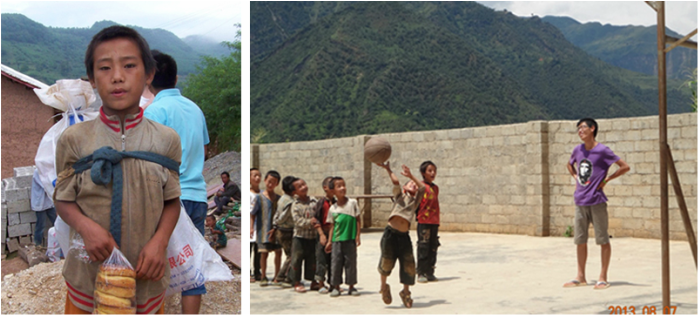
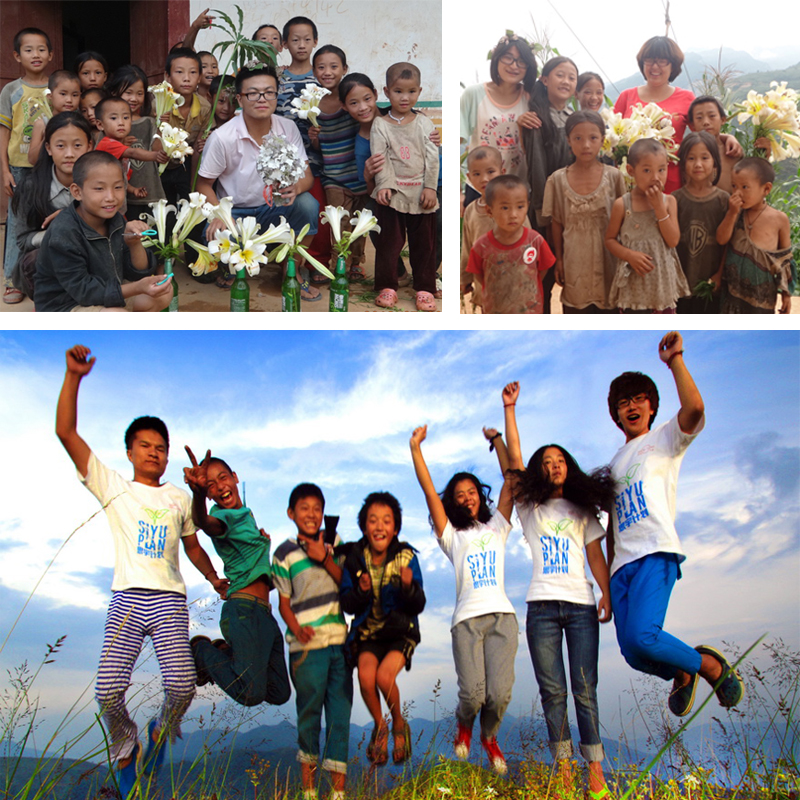
PictureLanze Biga carrying snacks and volunteer student playing basketball with the students.
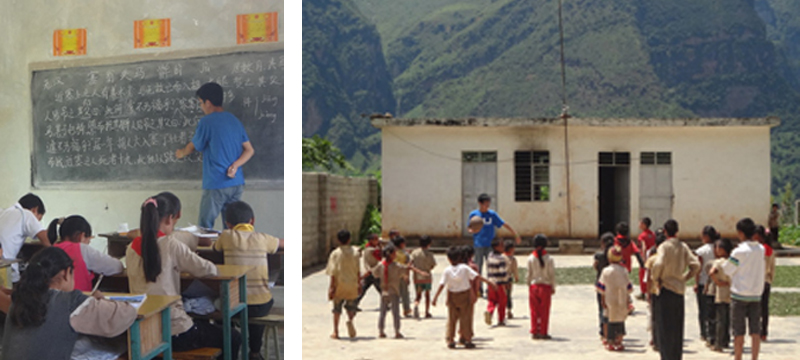
The Leprosy Project arranged a summer volunteer teaching program in cooperation with Siyu Organization for Social Responsibility, the biggest non-governmental volunteer project for education and community development in the Greater Liangshan area. Nine volunteers from the Siyu Organization spent their summer holidays in Xihe Village in Jinyang and Kuihua Village in Ganluo. The volunteers taught courses such as Chinese Language, English, Music, Art, Environmental Protection, Civil Education. They also designed courses specifically to suit the needs of each village.
The Leprosy Project is grateful to have the volunteers working in the villages. The village children benefited and it gave the volunteers an opportunity to learn firsthand about leprosy and the people in the villages. We hope this will be one more way to help end the stigma faced by the people in the villages we serve.

One of the volunteer students described his experiences as follows:

The Most Beautiful Holidays – Xihe Primary School

July 11, 2013 was the first time that I traveled without my family. This is when I began my trip as volunteer teacher in Xihe Village of Jinyang County in Liangshan Yi Autonomous Prefecture, Sichuan Province. I felt exceptionally good because there was hope when I stepped on to the train bound for Xichang City. I have gained a lot; most importantly I met new friends and students during my time there.

Zhao Jie – The most supportive person and the one to whom I need to express my gratitude.

Like most of the others, at the very beginning I was feeling a bit hesitant to teach in Xihe Village, Jinyang since it is well-known for difficult mountain paths and it is a leprosy rehab village. I finally accepted the challenge and when I told Zhao Jie he immediately joined the program with me. I personally have lots of shortcomings; picking on others is definitely one of them. I kept picking on him on the way to the village, but he never showed any dissatisfaction with me. Zhao Jie got along very well with everyone in the village; he taught and played ball games with children. Everyone liked him very much.

We had plans for doing household visits, and that was the most tiring duty for me. We had to walk more than half an hour on a rocky mountain path just to visit one family. Zhao Jie never complained and finished all the household visits. During the visits we met a boy whose mother had recently passed away. No one was taking good care of him. He was wearing ragged clothes and shoes. Zhao Jie walked hours to the nearest town to buy the boy new clothes and shoes. Zhao not only knew how to take care of others but he was also a good cook. He made me feel that I no longer needed to worry about anything.

Lanze Biga – The most moving student

Lanze Biga was the first student that we met on the way to Xihe Village. We met him as we passed through another village on the way to Xihe. To subsidize his family’s income, Lanze Biga walks three hours to buy snacks to resell in his village. He is 13 years old, but only a grade 3 student.

Lanze is a courageous and talkative boy, who called me “little chub” a nickname I was not happy with. When I found out that most of the village children had only two meals a day and potatoes were their staple food I realized the reason all the villagers were so thin; and of course I am a “chub” compared to them. The heartbreaking thing was that most of the children in the village are suffering from malnutrition. The children were polite and willing to share. One day we went fishing. One of the children dropped his shoes in the river; and of course a pair of shoes means a lot to the child. Lanze took off his shoes right away and offered them to the child.

These village children are smaller than children of same age group in towns and cities; though their appearance is smaller, their hearts and minds are much bigger. They know the joy of sharing. They often picked flowers and grilled corn for us when we were in the village. The day finally came when we had to leave the village. Lanze cried for a long time. We still keep in contact by phone, and Lanze is now the team leader in the class, and he has been practicing writing. He hopes that we can visit the village again soon.

I am not writing this to tell people that we have been doing something special, but because I want to let everyone know that there are still people and children in need of help and concern, and to let people know that leprosy is not scary. It is curable and totally under control nowadays. I would like to thank the Leprosy Project for letting me have such an opportunity that I could teach and live in the village. Thank everyone from The Leprosy Project, you are indeed the most beautiful people in the world.
Picture
1 Comment

Bursaries awarded to Sixty-Four Outstanding Students 

9/3/2013

2 Comments

 
Sixty-four students from the villages of Puge, Butuo, Jinyang, Xide, Luding and Muli received bursaries for the first semester of the school year 2013 to 2014. This is an increase of 25 students in our bursaries scheme since last term. The scheme covered 4 university students who received RMB2000 per semester; 9 senior high students who received RMB1000 per semester; 30 junior high students who received RMB500 per semester and 21 primary students who received RMB260 per semester.  The aim of the bursaries scheme is to help students from families that are unable to support their children’s education. The students are chosen by committees in each community. The bursaries are given to students with an outstanding academic performance. 

2 Comments

Jibu Wuzhi

7/26/2013

1 Comment

 
Picture
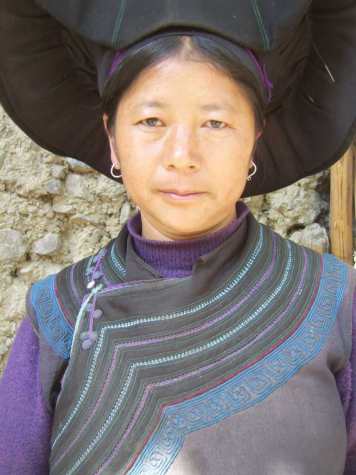
 Jibu Wuzhi cannot remember her father’s face, he died when she was just 8 years old. From that time on her mother struggled to feed and clothe her and her older brother and sister. Asked what her happiest childhood memories were, she said that after her father passed away they never had enough to eat, but sometimes relatives would give them extra noodles or rice. Also during Yi New Year, when most families would slaughter a pig, they would have a chicken. The chicken represented a year’s savings. This was also the time relatives would share food & clothing with them. Jibu Wuzhi was diagnosed with leprosy at the age of 11. She continued to live at home, but after the death of her mother two year later, Jibu Wuzhi was taken by a cousin to live on her own in the leprosy rehabilitation village of Xide.
Her cousin gave her cereal when she went to Xide, but it lasted for less than a month. Having no formal status in the village and no money for transportation she was forced to walk back to her home village to change her residency. It was a three day trip each way. After she changed her status she was able to get a food subsidy from the government and could use some of her food to sell and exchange for clothes. Jibu Wuzhi was 14.

For the first year Jibu Wuzhi lived with two older women in a straw hut. The other villagers pestered her to marry; she wasn’t interested. A few times she was so afraid that she would be forced to get married, she ran away. Her neighbors finally gave up on playing match maker.

The man who finally became her husband had moved to the village with his father who suffered from leprosy. His mother had died years before. Though he himself did not have leprosy he stayed on in the village. The courtship started with Jibu’s husband presenting her with gifts including small toys, clothing, and fabric. After about a year he proposed. At first she rejected him, but he persisted saying that if she didn’t like him she should give the gifts back. After some consideration, Jibu Wuzhi realized that she didn’t have any means to support herself. Her right leg was weak and she liked the thought of having someone to take care of her. She accepted his proposal. Jibu Wuzhi was 16, her husband was 21.

They now have two daughters, one son and five grandchildren who still live in the village. Life is much better. She has her own livestock, steady income and enough to eat.

Jibu Wuzhi is a member of the Xide Embroidery Cooperative. She was taught to embroider by the teacher employed by The Leprosy Project. Some patterns she embroiders following the patterns shown to her by the teacher, others are her own creation. It takes her about 5 days to complete an embroidered bag. The embroidery program has improved her life significantly. Jibu Wuzhi is diabetic and she has to pay for her drugs. Before she joined the Embroidery Cooperative she had to sell her livestock to pay for her treatment. Now she can use the extra money she earns from embroidery to pay for her medicine. Her embroidery also gives her the opportunity to give gifts to friends and relatives.


1 Comment

Sugaga

3/14/2013

0 Comments

 
Picture
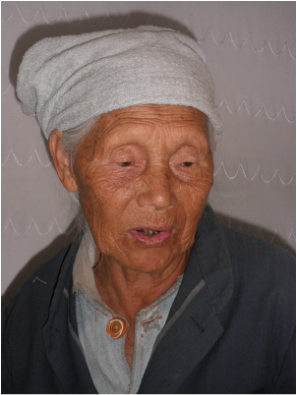
Sugaga is 78 years old. She grew up in a family of nine. She has had three husbands, and a total five children. She also has two grandsons who work near the leprosy village where she lives, so she gets to see them regularly.

She has a tattoo on her arm which she has had since childhood. She doesn’t fully understand what it means, but every girl in the Yi minority receives this tattoo between the ages of nine and twelve.

Sugaga was the baby of her family, with three older brothers and three older sisters. Her family were farmers, so she and her siblings spent their childhoods working with their parents rather than attending school. When Sugaga turned 12, she was allowed to join her parents in the field; prior to that, she performed the easier farming job of caring for the family livestock of pigs and cattle.

The family never ate the livestock – they were used to work in the fields – and when they died, they were too old to eat. Instead, Sugaga and her family ate congee made from buckwheat and wild wheat with one or two small potatoes, or sometimes other wild vegetables that grew on their farm. Every meal was the same.

Sugaga’s mother didn’t sleep at night. She spent her nights mending and making clothes for her children after working all day in the field. Sugaga’s mother would assess her children’s clothes to determine who was most desperate for new or mended clothes. She made all of the family’s clothes from scratch. She would start by getting wool from the lambs to make into yarn, then use metal needles to weave and knit the yarn to make clothes. It would take about two years to make one dress, so the younger children wore the mended hand-me-downs from their older siblings, often still with plenty of holes.

Sugaga had an arranged marriage at the age of 18 and later had three children. She was diagnosed with leprosy when she was about 25 years old, and soon after her diagnosis, her husband divorced her and took their children. She moved to the leprosy village in April of the year she turned 27, and in October of that same year, her husband died. Her children were left with her mother-in-law, who in turn, passed them onto her daughter, the children’s aunt. However, when the aunt married, she sent the children to a far off village and Sugaga has not heard from them since.

In the leprosy village, she got married again to a leprosy patient and they had a daughter. When they married, they moved to a small village nearby where they only had one neighbor. This neighbor was also a leprosy patient. They were all very poor so they always tried to help each other and all worked very hard. Their neighbor gave Sugaga and her family some land for free so they could grow rice and corn to earn a living. Sugaga’s daughter was unable to go to school because there were no schools in the area. Instead, she was responsible for their cows and goats.

Around 20 years ago, her second husband died and she decided to move back to the leprosy village because she found she was slowly becoming paralyzed and needed help. Gradually, she was unable to move her legs and her bones started to become detached. She was unable to work due to her disability, so Dr Yang started taking care of her, and in October of 2011, he became her third husband.

Her life has changed a lot and is much better now than it was before, and for that, she is very happy. She is fortunate enough to have a doctor as a husband who always takes care of her. At night before she falls asleep, she feels very sad as she reflects on her hard life. She can never forget her earlier life because it was so tough. She wishes there was a medicine that would erase the bad memories. She feels sorry for her own life and dreams of having a better one. She often wonders why she was chosen to have a life like this and to have contracted by leprosy. At the end of the day, she blames it all on her poor fate.

translation and editing by Georgie Reading

0 Comments

New Toilets for Luding

1/12/2013

0 Comments

 
Picture
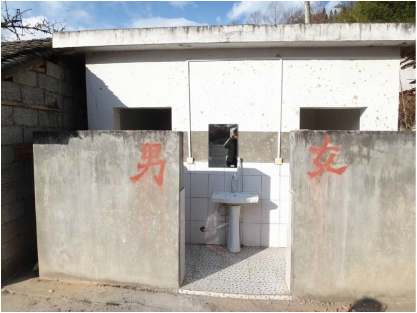
The toilets for the Five-Guaranteed Households in Luding were designed and built by the local government, unfortunately the design was defective and the toilets became badly clogged creating serious hygiene and environmental issues.  In addition the design of the toilet was unsuitable in view of the disabilities suffered by the PALS.   

With generous support from The Henley Group and Mr. Jonathan Van Smit, the toilets were redesigned and refurbished in December, 2012.  The toilets now have anti-slip tiles, a safety rail and are equipped with flushing water and running tap water.  The households elected a person to be in charge of the cleaning and management of the toilet.   


0 Comments

Extreme House Calls

1/11/2013

0 Comments

 
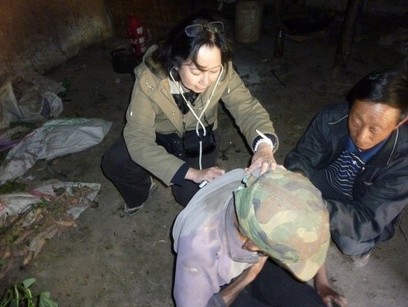
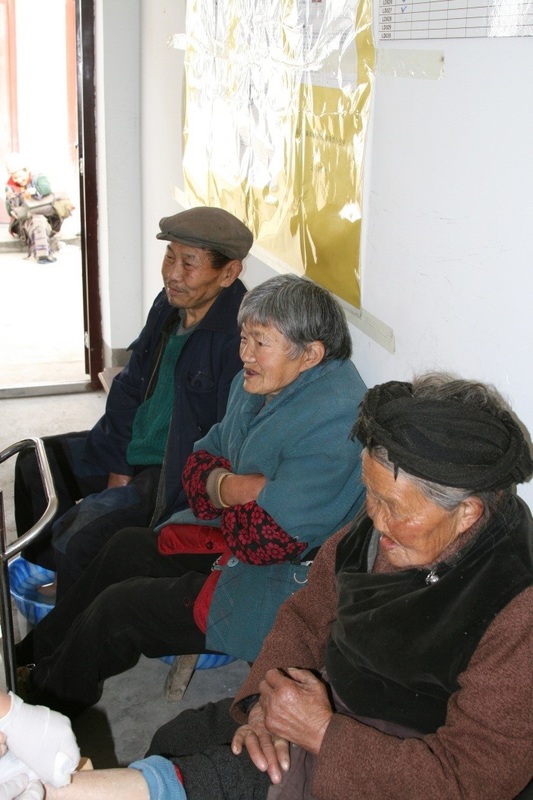
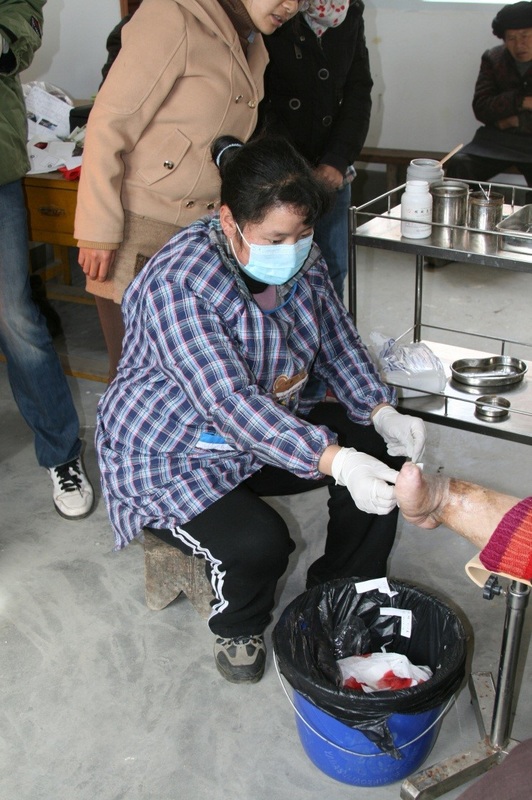
PictureMedical Director Dr. Theresia Liem examines PAL at his home in Puge
Each quarter Dr. Theresia Liem visits the far flung villages in The Project to monitor activities and ensure that proper protocol is used for treating PALS.  On her last trip she spent a week in November/ December 2012 visiting 4 villages Luding, Ganluo, Xide, and Puge.

During the trip Dr. Liem and the staff also conducted a survey of the families in Xide with malnourished children.  On Dr. Liem’s last visit she noted that malnutrition among the children a significant problem there.  The Project is initiating a program to work with the villagers to help them provide better nutrition for their children and nutrition education for the parents.


0 Comments

POD (prevention of disease)

1/11/2013

1 Comment

 
Picture
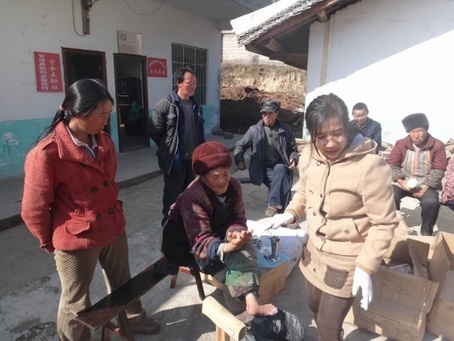
Treatment and prevention of disabilities is one of the main tenants of The Project.  Our staff in Xichang visit all the villages on a regular basis, providing training and medical assistance to villagers.  During the last quarter of 2012 staff spent 39 days making 13 visits to the 9 villages.

Village healthcare workers were replenished with sufficient POD (Prevention of Disabilities) supplies and tools; 4 crutches and 138 pairs of protective shoes were dispatched to PALs in need, alongside other protective tools. 

As winter comes, cases of chapped skin and burn injuries have been increased.  Most of the PALs are sensory impaired and unable to feel heat.  This often results in burns, especially during winter.  Project staff and healthcare workers continuously conduct household safety education for PALs to help them protect themselves from burn injuries as which often develop into ulcers.

1 Comment

Program Manager, Kelly Xu invited to talk to at Xichang College

1/10/2013

0 Comments

 
Picture
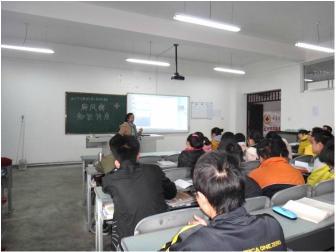
In December, Project manager Kelly Xu was invited by the Red Cross in Xichang to give seminar at Xichang College on leprosy.  Ms. Xu shared her knowledge of the effects and treatment of leprosy, and her experience in her seven years with The Project.  Her talk was followed by a question and answer session.  The audience was keen to ask questions and understand the true facts about leprosy.

The film “Children of Leprosy” produced by Mr. Rob Tinworth was a highlight of the event giving the audience a chance to see the real lives of PALs and their families in the project villages.

It is through seminars and publicity events like this that we are able to give positive messages and spread the truth to the public about leprosy.  Leprosy is not contagious and it is curable.

0 Comments

Liu Hanzhen

1/9/2013

0 Comments

 
Picture
“I was born in 1931 in a village near Kang Le (the leprosy rehab village where Liu lives now).  I have one sister and three brothers. Children were not able to go to school in those days.  My eldest brother worked in the landlord’s home to support the family.  My mother passed away when I was five years old.  I had too many siblings.  My father could not afford to feed so many mouths so I was sent away to live with another family.  Life with my adoptive family was difficult.  They were not kind and I rarely had a full meal.  I ran away and lived in the nearby graveyard without shelter, eating scraps and begging for food. I lived like this for two years.  Eventually my father found out and took me back.”

“Child brides were common in those days and I was promised to the son of another family.  I was sent to live with this family and given the task of taking care of their cattle.  I was well treated by my husband’s family.  With a contented smile Liu reminisced, “I have spent my entire life with my old companion since my childhood.  We love each other and have never argued.  We were officially married when I reached the age of 18.  An old lady whose zodiac was compatible with mine came to comb my hair.  My family offered a cabinet and a quilt for my dowry.  Relatives and friends from the village were invited to a simple banquet.”  

Liu joined the Communist Youth League in 1951 and was admitted to the Communist Party 3 years later.  She became one of the officials in the Village and Township Government.  As she talked, we could sense her pride in the early stages of her career.  Her good fortune did not last long though; she developed the symptoms of leprosy.  Everyone in the family believed it was because she had ‘too much dampness’ in her body from living in the graveyard.  At first they ignored the symptoms.  When Liu’s health did not improve, her friend recommended she have a check-up in the hospital.  It was then that she was diagnosed with leprosy.  Liu was sent to the leprosy rehab village in 1957.  She was one of the lucky ones, she did not have to spend her life in solitude; her husband decided to move to the leprosy village with her.  They left their three children to be taken care by their Grandparents.       

Life was tough in the 1960s; the Government was promoting self-reliance.  They had a slogan “Leprosy is not scary and it is curable.” The village began to develop, and many model laborers were sent to the village to visit and study. Despite this people continued to be afraid of people with leprosy.  Though the PALS were given ration coupons by the government it was difficult to for them to buy anything.  Outsiders would often sanitize the coupons before accepting them.

Liu recounted to us that during that time, “My foot was punctured by something sharp while working in the field.  I did not pay much attention to it.  Between the heavy workload in the fields and my position as the deputy village head, I had too much work to do.  Over the years my wound deteriorated and became a chronic ulcer.”  She stressed, however, that all 12 families in the village who married, after they fully recovered from leprosy, had children, and the second generation was born healthy. 

Liu speaks with pride about her children. Her youngest son is now a teacher and visits her very often; he also brought her to the best hospital in the area the last time she was sick.  He gave her more than one thousand Yuan to buy Chinese herbs to restore the health.  The day before we arrived, he called Liu to ask her whether she had finished the medicine, saying he would bring more during his next visit.  Liu seldom sees her daughter who married and moved away from the area.  Liu also told us that her eldest grandson is getting married soon and invited her to the wedding in her old hometown.  Sadly, she will not be able to share the happiness with him as the ulcers in her feet make traveling any distance very difficult.

When asked about her life now, Liu was excited to tell us about the development of the village and the installation of power cables. Everything is so different nowadays.  People outside the village show concern for us and as a result, the villagers’ mood is better.  Liu is looking forward to spending her remaining years watching how the world develops.

Picture
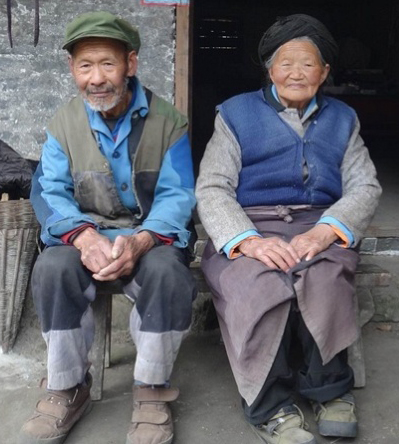
Liu Hanzhen and her husband outside their home in Luding
0 Comments

Asian Charitable Services Fund Raising Strategy Project

1/9/2013

0 Comments

 
We are honoured and pleased to have been selected by the Asian Charitable Services (ACS) to participate in their Fund Raising Strategy Project in January and February, 2013.  ACS is a registered non-profit organization in Hong Kong that aims at empowering and equipping non-profit organizations to build their capacity and improve their fundraising and long term planning.  This involves and intensive three session workshop and we are confident that our organization will have much to gain from attending these workshops.

0 Comments
<<Previous
Forward>>

    Archives

    May 2020
    April 2020
    November 2019
    September 2019
    August 2019
    June 2017
    September 2015
    August 2015
    July 2015
    June 2014
    November 2013
    September 2013
    July 2013
    March 2013
    January 2013

    Categories

    All
    Butuo
    Children's Education
    China Government Regulatioins
    Community Development
    Community Management
    Economic Improvement
    Ganluo
    Huidong
    Jinyang
    Life Stories
    Luding
    Nutrition & Hygiene
    Prevention Of Disease
    Project Staff
    Public Awareness
    Puge
    Volunteers
    Water Project
    Xide
    Yanbian
    Yanyuan

    RSS Feed

Powered by Create your own unique website with customizable templates.